



To fade dark spots and acne scars naturally, you must add a three-pronged clinical approach to your routine: inhibiting the tyrosinase enzyme to stop new pigment from forming, accelerating cellular turnover to shed existing stained cells, and providing rigorous photoprotection to prevent UV-induced darkening. By utilizing bioactive botanical extracts like Vitamin C, Licorice Root, and Niacinamide, you can effectively disrupt the melanogenesis pathway (the biological process of pigment production) without the harsh side effects of synthetic bleaching agents. In this blog, we’ll understand why dark spots and acne scars happen, and how to cure them naturally.
Why do dark spots and acne scars happen?

Dark spots are the result of your skin's defence mechanism. When your skin is injured by a pimple or UV rays, it sends an emergency signal to its pigment-producing cells to produce melanin (the pigment that gives skin its colour) to protect the area. Let’s understand it more elaborately:
Inflammation and Trauma
When an acne lesion forms, the immune system responds with inflammation. According to a study published in the Journal of Clinical and Aesthetic Dermatology, this inflammatory response triggers melanocytes (the cells located at the bottom of your epidermis) to go into overdrive. These cells act like tiny factories, churning out extra pigment to protect the wounded tissue from further damage.
The Tyrosinase Enzyme
The actual production of dark spots requires a specific enzyme called tyrosinase. Think of it like an “on switch” for pigment. According to research in the Journal of Biological Chemistry, during skin trauma, tyrosinase becomes hyperactive. It converts the amino acid tyrosine into melanin, which is later on packaged into tiny parcels called melanosomes and shipped to the surface of your skin.
PIH vs. Structural Scarring
It’s important to understand the difference between a change in colour and a change in texture. The medical literature generally categorises these two distinct outcomes:
-
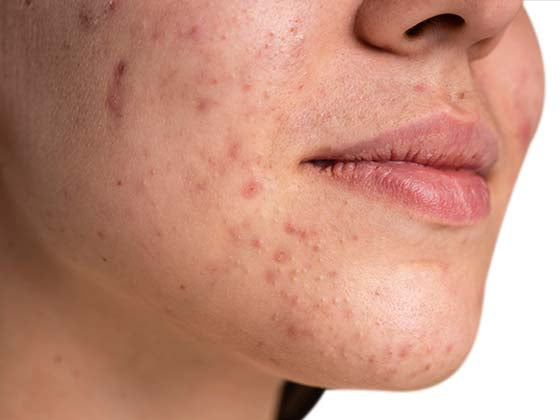
Post-Inflammatory Hyperpigmentation (PIH): It’s recognised as a flat brown or black spot. It’s purely an accumulation of excess pigment in the upper layers of the skin.
-
True Acne Scars: As mentioned in the American Journal of Clinical Dermatology, true acne scars occur when the inflammation is so deep that it destroys collagen and elastin. This results in atrophic scars (indentations) or hypertrophic scars (raised bumps). Natural topicals can fade the colour of these marks, but usually can’t fill in the texture of a deep scar.
UV Light Makes a Scar Permanent
The reason dark spots stay for months is often due to photo-stabilisation. The Journal of Investigative Dermatology states that even incidental sun exposure (like sitting near a window) provides enough energy to keep those melanocytes active. Without adequate sun protection, the skin believes it’s still under attack, causing it to continue producing pigment long after the original acne has healed.
What are the best natural ingredients for hyperpigmentation?

Nature provides several effective ingredients that can match the efficacy of synthetic treatments like hydroquinone, but with a lower risk of irritation. According to research published in the Journal of Clinical and Aesthetic Dermatology, some of the praised formulations for natural brightening include:
Vitamin C (L-Ascorbic Acid)
Vitamin C is one of the most well-known natural antioxidants in dermatology. It works by donating electrons to neutralise free radicals and by chelating (binding) copper ions required by the tyrosinase enzyme. A study in Nutrients confirms that topical Vitamin C significantly reduces melanin synthesis. Inhibiting the enzyme responsible for pigment, it prevents new spots from forming while brightening existing ones. Vitamin C also boosts collagen synthesis, which helps in improving the appearance of the pitted texture in shallow acne scars.
Niacinamide (Vitamin B3)
While many ingredients stop pigment production, Niacinamide works differently by stopping the transfer of pigment. Research in the British Journal of Dermatology demonstrates that Niacinamide prevents up to 35-68% of melanosome transfer from melanocytes to keratinocytes (the skin cells you see on the surface). It strengthens the skin’s lipid barrier and reduces redness, making it ideal for those dealing with both dark spots and active sensitivity.
Licorice Root & Kojic Acid
Both these ingredients are used as natural alternatives to harsh chemical bleaches.
-
Licorice Root (Glabridin): Glabridin is an active component that inhibits tyrosinase activity without being toxic to the cells. According to the Journal of Agricultural and Food Chemistry, Licorice root can be up to 16 times more effective at skin lightening than hydroquinone in some concentrations.
-
Kojic Acid: Derived from various fungi (and a byproduct of fermenting sake), Kojic acid is a potent antioxidant. Various clinical trials published in Dermatologic Surgery show it’s highly effective at treating melasma and PIH by suppressing free tyrosinase in the skin.
Azelaic Acid
Azelaic Acid is found naturally in grains such as barley and wheat. According to the Journal of the American Academy of Dermatology (JAAD), azelaic acid specifically targets hyperactive melanocytes while leaving normal pigment alone. It’s both anti-inflammatory and antibacterial, making it the best choice for people who are currently breaking out and want to prevent future scars from forming.
Comparison of Botanical Skin-Brightening Actives
|
Ingredient |
Working Mechanism |
Best For |
|
Vitamin C |
Tyrosinase Inhibition |
Overall glow and sun damage |
|
Niacinamide |
Blocks Pigment Transfer |
Redness and enlarged pores |
|
Licorice Root |
Competitive Inhibition |
Sensitive skin types |
|
Azelaic Acid |
Targets Overactive Cells |
Acne-prone skin and PIH |
Step-By-Step Morning & Night Routine for Clear Skin

This routine is designed based on the circadian rhythms of the skin. According to the Journal of Clinical Dermatology, skin permeability and repair processes peak at night, while antioxidant defense is the priority during daylight hours.
The AM Routine
This morning routine focuses on protecting your skin with antioxidants. You need to neutralize the free radicals from UV light and pollution that trigger the tyrosinase enzyme.
-
Step 1: Use a gentle pH-balanced, sulfate-free cleanser. Over-stripping the skin can cause rebound inflammation, which signals melanocytes to produce more pigment.
-
Step 2: Apply a stabilised Vitamin C serum (look for L-ascorbic acid or Sodium Ascorbyl Phosphate). Research published in The Journal of Clinical and Aesthetic Dermatology shows that Vitamin C works synergistically with sunscreen to provide enhanced protection against UV-induced pigment.
-
Step 3: Apply a Niacinamide-rich Moisturizer. This helps keep the skin barrier sealed, preventing environmental irritants from reaching the deeper layers of the dermis.
-
Step 4: It’s necessary to apply a mineral SPF 30+ sunscreen. Look for products that contain filters like Zinc Oxide. A study in the Journal of the American Academy of Dermatology found that Zinc Oxide blocks UV rays, alongside providing a cooling effect that reduces the heat-induced inflammation known to worsen melasma.
The PM Routine
During night, you must focus on accelerating cellular turnover to shed the cells that are already stained with excess melanin.
-
Step 1: Use a natural oil cleanser (like Jojoba Oil) followed by your regular cleanser. It ensures that water-resistant SPF and environmental pollutants are fully removed.
-
Step 2: Apply your treatment serum containing Licorice Root, Kojic Acid, or Azelaic Acid. Nighttime application allows these tyrosinase inhibitors to penetrate deeply without interference from sunlight.
-
Step 3: Bakuchiol is a plant-derived compound that acts as a natural alternative to retinol. Clinical trials published in the British Journal of Dermatology prove that it functions similarly to retinol by speeding up cell turnover to push out old pigment, but without the harsh peeling or irritation.
-
Step 4: Finish with a cream rich in Ceramides or Rosehip Seed Oil. Rosehip Seed Oil is naturally high in trans-retinoic acid that aids tissue regeneration and helps soften the appearance of structural acne scars.
Final Thought: Your Path to Clear Skin Simplified
Fading hyperpigmentation naturally is a biological process that requires both patience and chemical precision. By combining tyrosinase inhibitors like Vitamin C and Licorice Root with barrier-builders like Niacinamide and accelerated turnover from Bakuchiol, you can interrupt the pigment pathway.
On the other hand, where these botanical actives are clinically potent, Daily mineral SPF remains your primary defense, without it, melanocytes will remain in a constant state of overproduction. Usually, the skin’s natural renewal cycle takes roughly 30 days. With consistent use of the recommended routine for a 4 to 8 week period, you can actually get visible results.
Dermatologist’s Note: While natural ingredients are highly effective for PIH, deep structural scarring or resistant melasma may require professional-grade intervention. If you’re looking for a definitive, high-speed solution for complex skin concerns, consult a dermatologist to ensure effective treatment and result.